Why Fire Doors Get Propped Open (and How to Fix It)
A wedge under a fire door is the most common finding on any inspection, and the usual response — remove the wedge, send a memo — works for about two weeks. It works for two weeks because somebody propped that door for a reason, and the memo did not address the reason.
Nobody props a fire door out of malice. In every building where we have found one, there was an explanation and it was a sensible one.
- A corridor that gets uncomfortably hot without airflow.
- A kitchen door that staff pass through with both hands full, forty times a shift.
- A loading route where a trolley will not fit through a half-open door.
- A stairwell door that slams loudly enough to disturb the office next to it.
- A door so heavy that staff have quietly decided it is not worth the fight.
Each of those is a real operational problem. The wedge is a bad answer to it, but it is an answer, which is more than the memo offers.
Why the wedge is genuinely the wrong answer
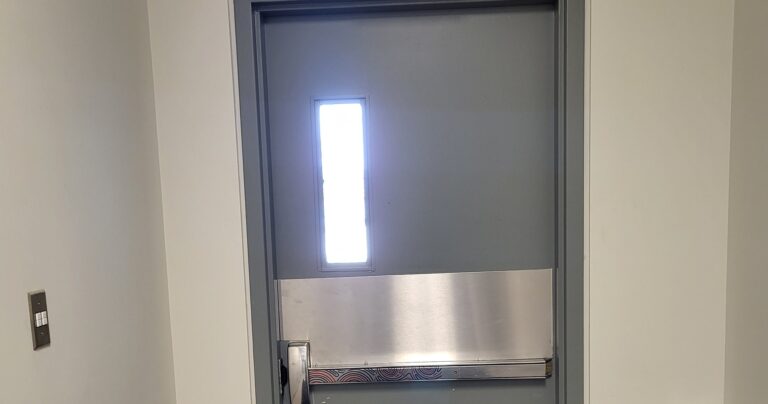
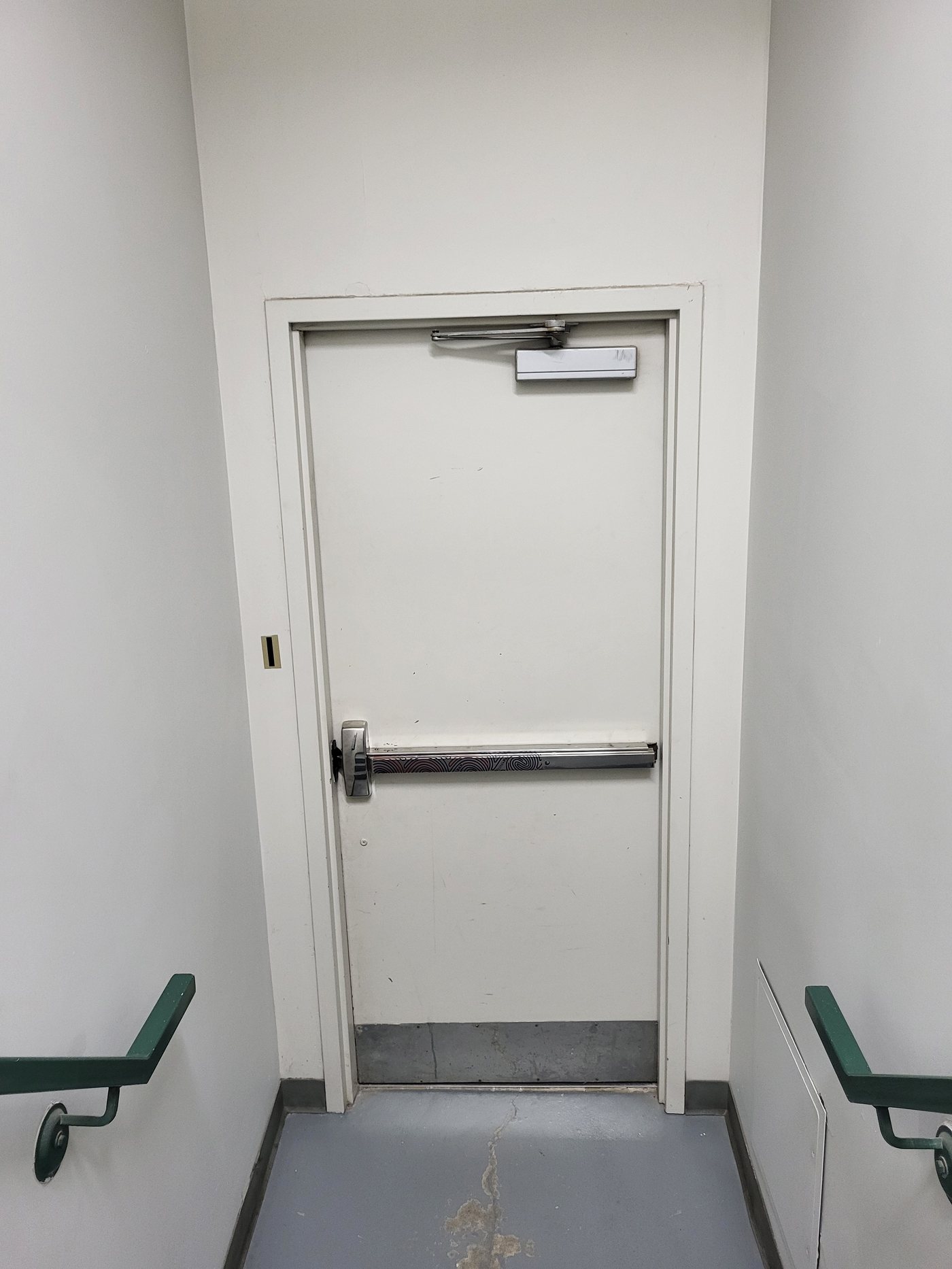
A fire door is not primarily a security device or a noise barrier. It is a barrier against the movement of fire and smoke through a building, and it only works in the closed and latched position.
The thing that makes a propped fire door dangerous rather than merely non-compliant is that it is completely fine on every ordinary day and catastrophic once. There is no version of this that is an acceptable risk, because the failure mode is not gradual. A corridor that would have stayed clear for the fifteen minutes people needed to get out instead fills with smoke.
It is also the finding an inspector is most likely to see, because unlike a worn seal or a drifted closer, a wedge is visible from the end of the corridor.
There is a lawful way to hold a fire door open
This is the part most building managers do not know, and it resolves the problem properly rather than forbidding it.
An electromagnetic hold-open device wired into the fire alarm will hold a fire door fully open all day. When the alarm sounds, the magnet releases and the closer shuts the door. The corridor gets its airflow, the kitchen staff keep both hands full, and the barrier is still a barrier at the only moment it matters.
It is a proper engineering answer to a real operational problem, and it is considerably cheaper than most people assume. It is also maintainable — the device has to be tested and it has to release on alarm, and that forms part of what a fire door inspection checks.
Where a hold-open is not practical, there are other routes. A power operator solves the heavy-door problem. A different closer configuration can solve the slamming. A door that genuinely does not need to be rated — and some propped doors turn out not to be — can be replaced with one that does not need to close at all.
What rarely works
Asking people to stop doing the thing that makes their job possible. If a door is being propped daily, the honest conclusion is that the building is asking something of its staff that the hardware does not support.
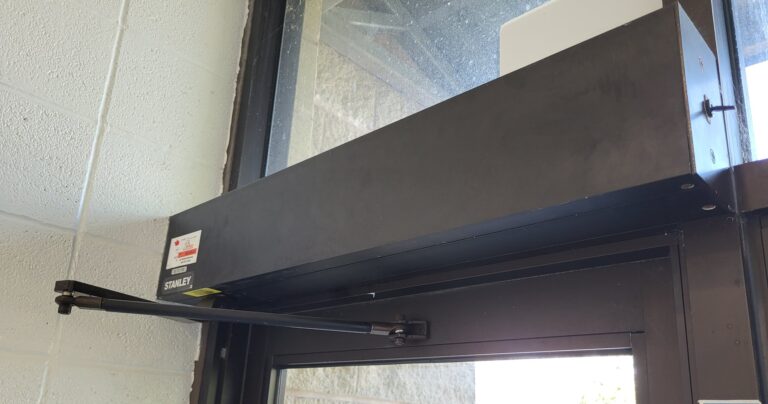
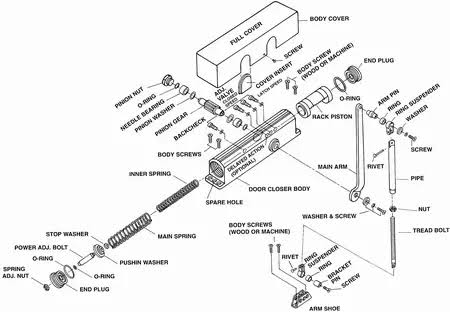
The second thing that rarely works is removing the wedge without looking at the door. A door propped because it is too heavy is telling you the closer is wrong for the opening, or wound up to fight a draft, or both. Fix that and the wedge stops coming back without anybody being asked.
If you have one right now
Go and look at why. Not at the door — at the reason. Ask whoever works near it what happens when it is shut. The answer is almost always specific, and it is almost always solvable.
And if a wedge has been there long enough that nobody remembers putting it there, check whether the door still closes and latches on its own when you remove it. Doors that have been held open for years frequently do not, because nothing has been maintaining a closer that was never being used. That fault has six common causes, and they are not interchangeable.